
In 2025, Indigenous Peoples continued their fight in and out of the courts to defend their rights and lands, hold the Crown to its constitutional obligations, and advocate against discrimination. Check out our annual Indigenous Rights Year in Review countdown below to learn more.
5. UNDRIP and Crown Obligations
Almost a decade after the Government of Canada finally affirmed its full and unqualified support of the United Nations Declaration on the Rights of Indigenous Peoples (UNDRIP), the Federal Court directly addressed the role of UNDRIP in the context of the Crown’s duty to consult.
In Kebaowek First Nation v. Canadian Nuclear Laboratories, the Court ruled the Crown breached its constitutional obligations to Kebaowek First Nation by failing to consider UNDRIP, including the principle of free, prior and informed consent (FPIC), prior to issuing a decision approving the construction of a nuclear waste disposal facility.
Check out Kate and Nico’s case comment to learn more: UNDRIP at the Federal Court: Case Comment on Kebaowek First Nation v. Canadian Nuclear Laboratories.
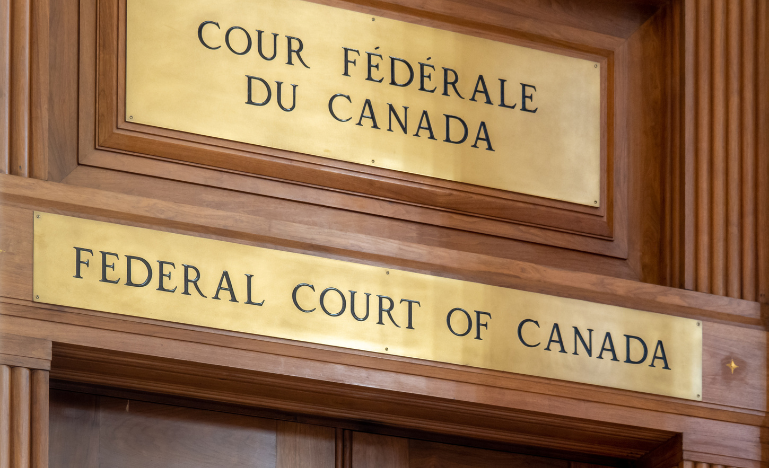
Photo credit: iStockphoto/sockagphoto (License)
4. The Second-Generation Cut-Off
The Indian Act defines who is eligible to be considered an “Indian” for purposes of federal programs and services in Canada.
Indigenous people have successfully brought court challenges against the current eligibility rules. Now, a new law has been proposed to remedy discrimination in how Canada decides who qualifies as an “Indian.”
To learn more about the legislation and what it could mean for those affected by discriminatory eligibility requirements, check out Patricia’s November blog post: Bill S-2 and the Second-Generation Cut-Off.
In December, the Senate subsequently passed Bill S-2 with amendments that address the second-generation cut-off and give the government one year to develop a plan before the changes come into effect. Now, it is the House of Commons’ turn to debate the proposed law.
Photo credit: Hutima (License)
3. Major Projects Legislation
Crown governments across Canada passed legislation intended to fast-track major resource development projects. These laws weaken regulatory oversight over resource projects and dilute processes designed to fulfil the Crown’s duty to consult.
But the Crown’s duty to consult Indigenous peoples is constitutional. The Crown cannot sidestep the duty to consult by passing new legislation. Legally enforceable obligations to consult Indigenous peoples exist 'upstream' of federal and provincial laws.
Bruce shared cautionary tales and predictions throughout the spring as this frenzy of “cutting red tape” unfolded:

Photo credit: Ricardo Gomez Angel (License)
2. Reconciling Aboriginal Title & Private Property
The BC Supreme Court decision in Cowichan Tribes v Canada was one of the most talked about legal developments this year.
Cowichan Tribes is a major victory for the Cowichan people. The decision affirms the Cowichan hold Aboriginal title to their traditional village lands within the City of Richmond, including lands which are held in fee simple by private parties.
The decision spurred a flurry of statements from government officials, politicians and the public largely based on misunderstandings about Aboriginal title and property rights. Kate’s October blog post, Correcting Misconceptions: The Cowichan Tribes Decision, attempts to dispel those misconceptions.
Several parties appealed the decision. Stay tuned to the First Peoples Law Report for developments on this case.
To learn more about the potential implications of the decision, check out Kate’s blog: Reconciling Aboriginal & Fee Simple Title: Cowichan Tribes.

Photo credit: John Grantham
1. The Truth and Reconciliation Commission 10 Years Later
2025 marks 10 years since the Truth and Reconciliation Commission (TRC) delivered its Final Report on the legacy of Canada’s residential school system.
The TRC found that the establishment and operation of residential schools formed a central component of a broader set of federal policies which amounted to cultural genocide.
The TRC’s 94 Calls to Action charted a course forward, but many remain unfulfilled. This anniversary presents an opportunity to reflect on the sincerity of Canada’s commitment to reconciliation.
Read Kate’s reflection on where things stand and where we are going: 10 Years Later: Reflecting on the Legacy of the TRC.
First Peoples Law LLP is a law firm dedicated to defending and advancing the rights of Indigenous Peoples. We work exclusively with Indigenous Peoples to defend their inherent and constitutionally protected title, rights and Treaty rights, uphold their Indigenous laws and governance and ensure economic prosperity for their current and future generations.
For more First Peoples Law analysis, visit our blog
Sign up for our First Peoples Law Report