
While the principle of Free, Prior, and Informed Consent (FPIC) has gained traction in Canadian law since the passage of the federal United Nations Declaration on the Rights of Indigenous Peoples Act in 2021, uncertainty remains about how FPIC applies in practice.
Recent court decisions confirm that the United Nations Declaration on the Rights of Indigenous Peoples (UNDRIP) is the interpretive lens to be applied when determining if Canada has fulfilled its legal obligation to consult Indigenous peoples prior to making decisions that affect their lands and rights. UNDRIP is the measuring stick for honourable Crown conduct. However, these same decisions found UNDRIP does not create new substantive rights or obligations on the Crown.
This tension has created confusion about the practical effects of FPIC, and the extent to which it supports Indigenous Nations’ ability to protect and care for their lands and resources.
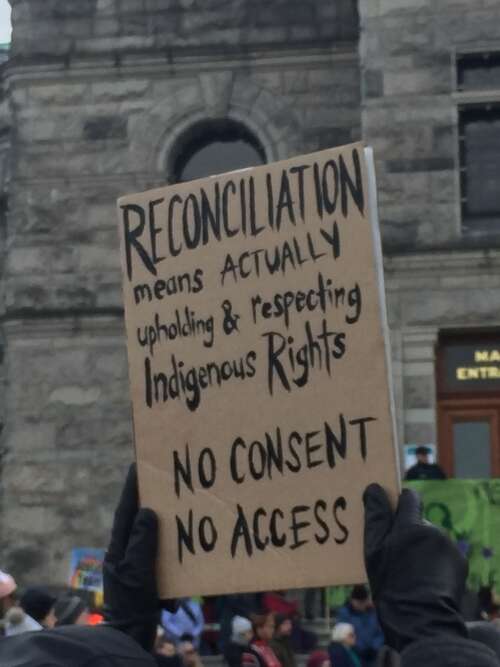
Aligning Canadian law with the Requirements of FPIC
Consent is not a novel concept in Canadian law. The requirement for consent dates as far back as the Royal Proclamation of 1763 and has been encouraged as best practice since the Supreme Court’s 1997 decision in Delgamuukw. The importance of consent is grounded in Indigenous peoples’ prior occupation of their territories, and their inherent right to govern and manage these territories in accordance with their own laws and procedures.
Although consent is often espoused as the objective of consultation, in many cases, Canadian courts have held that the duty to consult may be satisfied so long as the Crown makes reasonable efforts to respond to Indigenous peoples’ requests and concerns, including by adopting measures to avoid or minimize the potential impacts of an activity on Indigenous rights.
The FPIC standard demands more. UNDRIP requires states to consult and cooperate with Indigenous peoples to obtain their free, prior, and informed consent before authorizing activities which may affect their territories.
Recent court decisions suggest that aligning the duty to consult framework with the FPIC standard requires the Crown to meaningfully consider Indigenous laws, knowledge, and practices, and employ mechanisms directed toward finding mutual agreement.
The ability to work towards agreement, however, continues to be constrained by arbitrary time limits, restrictive assessment scopes, narrow criteria for decision-making, and the ongoing assertion of unilateral and exclusive Crown authority. All of this makes true collaboration and shared governance elusive.
Indigenous Nations Leading the Way to FPIC
Indigenous Nations began developing and implementing their own laws and procedures setting out how Crown and proponents may respect and obtain their right to FPIC well before the passage of the federal UNDRIP Act. The Mi’gmaq Rights Impact Assessment Framework, the Sipekne’katik Governance Initiative Protocol, Grand Council Treaty 3’s Manito Aki Inaakonigewin and Kebaowek First Nation’s Rights & Responsibilities Assessment Law are just a few examples of innovative approaches that implement the right to FPIC and provide a foundation through which Indigenous Nations can exercise their jurisdiction and make decisions about the use of their territories in accordance with their own laws and values.
Indigenous-led FPIC processes can operate in parallel to federal and provincial environment assessment laws, and can inform the planning, information-gathering, evaluation, decision-making, and post-decision phases. Indigenous peoples–as the original stewards of the lands and waters–are best placed to evaluate the potential risks and impacts of a project, considering their deep knowledge of ecological systems.
Renouncing the Doctrine of Discovery and Terra Nullius in Practice
If the right to FPIC is to be implemented meaningfully, the Crown must respect the self-determination of Indigenous Nations and renounce –in practice– the Doctrine of Discovery and terra nullius which continue to justify the unilateral assertion of an exclusive Crown sovereignty.
Making room for Indigenous laws, knowledge, and practices in consultation processes without recognizing of the authority of Indigenous peoples to make decisions about their territories is not enough to implement the right to FPIC.
Crown governments and proponents can start respecting the right to FPIC by following Indigenous peoples’ own laws and procedures and making commitments to refrain from issuing decisions or building projects without having first secured consent.
Charlotte Connolly is a lawyer at First Peoples Law LLP.
Contact Charlotte and connect with her on LinkedIn.
First Peoples Law is a law firm dedicated to defending and advancing the rights of Indigenous Peoples in Canada. We work closely with First Nations to defend their Aboriginal title, rights and Treaty rights, uphold their Indigenous laws and governance and ensure economic prosperity for their members.
Sign up for our First Peoples Law Report for your latest news on Indigenous rights